
"tree can"
30000 article(s) found

The planting conditions of coffee trees the types of coffee trees
The Robastian coffee tree, which originated in the Congo in Africa, accounts for about 20% of the world's production. 30%. Robasta coffee tree is suitable for planting in the lowlands below 500 meters above sea level, has strong adaptability to the environment, can resist bad climate, resist diseases and insect pests, and does not need much manual care during soil preparation, weeding and pruning, and can be allowed to grow in the wild. It is easy to cultivate.

What is the lifespan of a coffee tree? can coffee grow continuously?
It is needless to say that coffee drinkers naturally recognize the characteristics of coffee beans, but when it comes to coffee trees, it is estimated that most people still do not understand them. Coffee trees are trimmed short to save energy and help harvest, but can grow to more than 30 feet (9 meters) tall. Each tree is covered with green waxy leaves and grows in pairs with each other. Coffee cherries grow along the branches.

Coffee tree history coffee morphological characteristics coffee cultivation techniques
Coffee tree is a shrub or small tree of Rubiaceae; leaves opposite, leathery, long oval; every March, branches will emerge white flowers, petals spiral arrangement, flower center around the petals jump, a closer look, really like childhood play with the small windmill, issued bursts of jasmine fragrance; fruit is oval, berry, dark red, hidden two seeds, that is, we are familiar with coffee

Species and cultivation techniques of Coffee trees
Arabica bean coffee tree can be divided into two main varieties: Arabica species (Coffea Arabica) and Robusta species (Coffea Robusta/Coffea Canephora). There are also some minor species, such as the Liberian species (Coffea Liberica) and the Alabasta species (Coffea Arabusta), but they are rare on the market.

What kind of planting environment do coffee trees need to have? do coffee trees require a high planting environment?
The first flowering period of the coffee tree is about three years old. the white five-petal tube-shaped flowers are filled with a faint scent of jasmine and the inflorescences are arranged in dense clusters. Flowers wither after two or three days of blooming and begin to bear fruit after a few months. The fruit is a drupe with a diameter of about 1.5 cm, which is green at first, then turns yellow gradually, and turns red after ripening, which is very similar to cherries.

Discussion on the problem of shading Coffee trees again
Coffee planting, with certain shade trees, can improve the quality of coffee, which is internationally recognized. Not only that, keep the coffee garden with a certain degree of concealment, and we recommend that the degree of concealment be controlled at about 30%. Can always make the coffee garden in a good ecological environment (especially shaded trees can maintain the diversity of tree species), so as to reduce the occurrence of coffee diseases and insect pests.
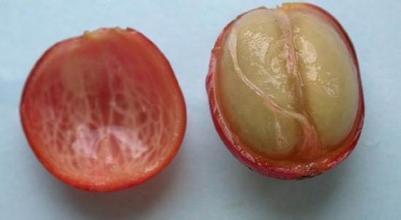
Coffee tree coffee flower coffee mature coffee spice
Coffee tree, a perennial evergreen shrub or small tree of Rubiaceae, is a horticultural perennial cash crop with the characteristics of fast growth, high yield, high value and wide market. Wild coffee trees can grow to a height of 5 to 10 meters, but coffee trees planted on the manor are often cut to less than 2 meters in order to increase their fruit and facilitate harvesting. The opposite leaves of coffee trees show
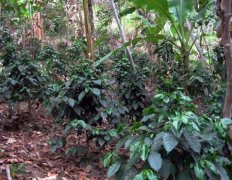
The production of coffee basic knowledge and high-quality coffee beans
Coffee trees take 3-5 years from planting to fruiting. 6-10 years of coffee trees are the most likely to bear fruit, about 15-20 years, is the harvest period. Coffee trees are usually bred in nurseries and grow into saplings, and then moved to coffee farms a year later, in full compliance with the way the Arabs planted and cultivated coffee trees. Coffee trees will continue to take root downward and upward in the first four or five years of their growth.

A brief introduction to the Life process of Coffee beans
Coffee trees take 3-5 years from planting to fruiting. 6-10 years of coffee trees are the most likely to bear fruit, about 15-20 years, is the harvest period. Coffee trees are usually bred in nurseries and grow into saplings, and then moved to coffee farms a year later, in full compliance with the way the Arabs planted and cultivated coffee trees. Coffee trees will continue to take root downward and upward in the first four or five years of their growth.
The establishment of a coffee garden
1. The environmental conditions of land selection, planning and reclamation are closely related to the growth and development of coffee, which should be determined according to the growth habits and environmental requirements of coffee. Try to avoid choosing lowlands where cold air is easy to accumulate and condense frost; coffee roots are good, so choose well-drained and loose soil; coffee needs a calm wind environment, so in areas where there is no primary forest, consideration should be given to planning windbreaks.

The ideal growing environment for coffee trees the common sense of coffee tree planting coffee tree varieties and regional factors
Professional coffee knowledge exchange more coffee bean information Please pay attention to coffee workshop (Wechat official account cafe_style) Coffee trees grow in the tropics between Tropic of Cancer and Tropic of Cancer and near the equator, also known as the world coffee growth belt, caffeine varieties and regional factors, there are also great differences in appearance. Evergreen leaves from yellowish green to dark green or
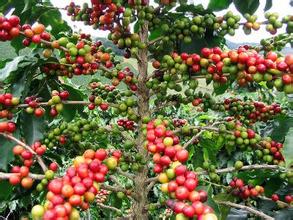
A brief understanding of the varieties of coffee trees, a detailed analysis of the classification of coffee trees.
Different varieties of coffee beans have different tastes, but even the same varieties of coffee trees have their own unique flavor due to the influence of different soil and climate. 1. Arabica Coffee Tree (coffeaarabica) originated from Arabica Coffee Tree in Ethiopia, which accounts for 70% of the world's coffee bean production. The world-famous Lanshan Gaffin and Mo
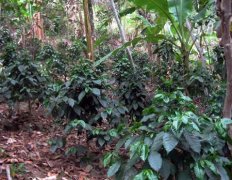
The general knowledge of fine coffee explains the production of coffee beans in detail.
Coffee trees take 3-5 years from planting to fruiting. 6-10 years of coffee trees are the most likely to bear fruit, about 15-20 years, is the harvest period. Coffee trees are usually bred in nurseries and grow into saplings, and then moved to coffee farms a year later, in full compliance with the way the Arabs planted and cultivated coffee trees. Coffee trees will continue to take root downward and upward in the first four or five years of their growth.

Planting conditions of coffee trees what kind of environment is suitable for coffee trees to grow in?
However, not all the land located in this area can produce good coffee trees. The ideal planting conditions of coffee trees are as follows: the temperature is between 15 ℃ and 25 ℃, and the annual rainfall must reach 1500 mm to 2000 mm. At the same time, the rainfall time should be in line with the flowering cycle of coffee trees. Of course, in addition to the coordination of seasons and rainfall, there should be fat work.

How many jin of coffee fruit can a tree produce in a year-how to transplant a famine coffee tree
Coffee growers who produce low-grade coffee beans a year like to use labor-saving methods to pick beans, but in this way, because the quality is not pure, it reduces the coffee flavor and lowers the coffee grade. The way to pick coffee beans in some parts of Africa is to shake coffee trees, shake the fruit off the ground, and pick it up from the ground before the fruit is injured and rotten. Production in most parts of Brazil

Coffee trees are evergreen shrubs or trees belonging to Rubiaceae.
1 Coffee trees are evergreen shrubs or trees belonging to the Rubiaceae; wild coffee trees can grow to a height of 5 to 10 meters, but coffee trees planted in the manor are often cut to a height of less than 2 meters in order to increase fruit and facilitate harvesting. The opposite leaf of the coffee tree is long oval, the leaf surface is smooth, the end branch is very long, the branch is few, and the flower is white, opening on the petiole.

Basic knowledge of boutique coffee name of coffee tree species
Almost all coffee with the best flavor is Arabica coffee beans. But Arabica species can be subdivided into different categories, and the coffee beans formed by all kinds of coffee trees are not necessarily very delicious. Think about it: there are so many kinds of differences in apples alone, just like the varieties of wine. Cabernet Sauvignon, Pinot Noir, Chardonnay and so on

How long does it take for coffee trees to blossom to mature coffee berries?
How long does it take for coffee trees to bloom to mature coffee berries? coffee trees can only grow in the tropics and subtropics, and coffee trees can grow in different climates, soils, elevations and rainfall in the middle of the coffee belt. Coffee trees thrive in Africa's hot and humid canyons and forest rainforests, and it still produces high-quality coffee in cold, foggy, windy Central America.

A little knowledge about coffee trees how coffee trees grow and grow their own coffee trees.
Professional coffee knowledge exchange more coffee bean information Please follow the coffee workshop (Wechat official account cafe_style) there are more than 6000 species of coffee trees, most of which are tropical trees and shrubs. There are four main coffee trees in the world, of which only two are of real commercial value and are planted in large quantities, and the quality of the coffee beans is also better than that of other coffee trees.

Basic knowledge about coffee trees the origin of coffee trees is in Ethiopia, Africa.
The origin of the coffee tree is Ethiopia in Africa. In botany, coffee trees belong to the long green trees of the subgenus Rubiaceae, and coffee beans, commonly known as coffee beans, are actually the seeds of the fruit of coffee trees, just because they are shaped like beans, so they are called coffee beans. Climate is the decisive factor for coffee cultivation. Coffee trees are only suitable for growing in the tropics or subtropics, so latitude 25 is south and north.